·9 min read
Bringing customs in house
Filing yourself or outsourcing is not a matter of principle but a calculation, and the answer differs per flow inside the same company. This piece walks through the decision the way a shipper actually makes it: volume, margin per shipment, the risk you are already carrying, and what it really takes before the first declaration of your own can go out.
What actually drives the decision?
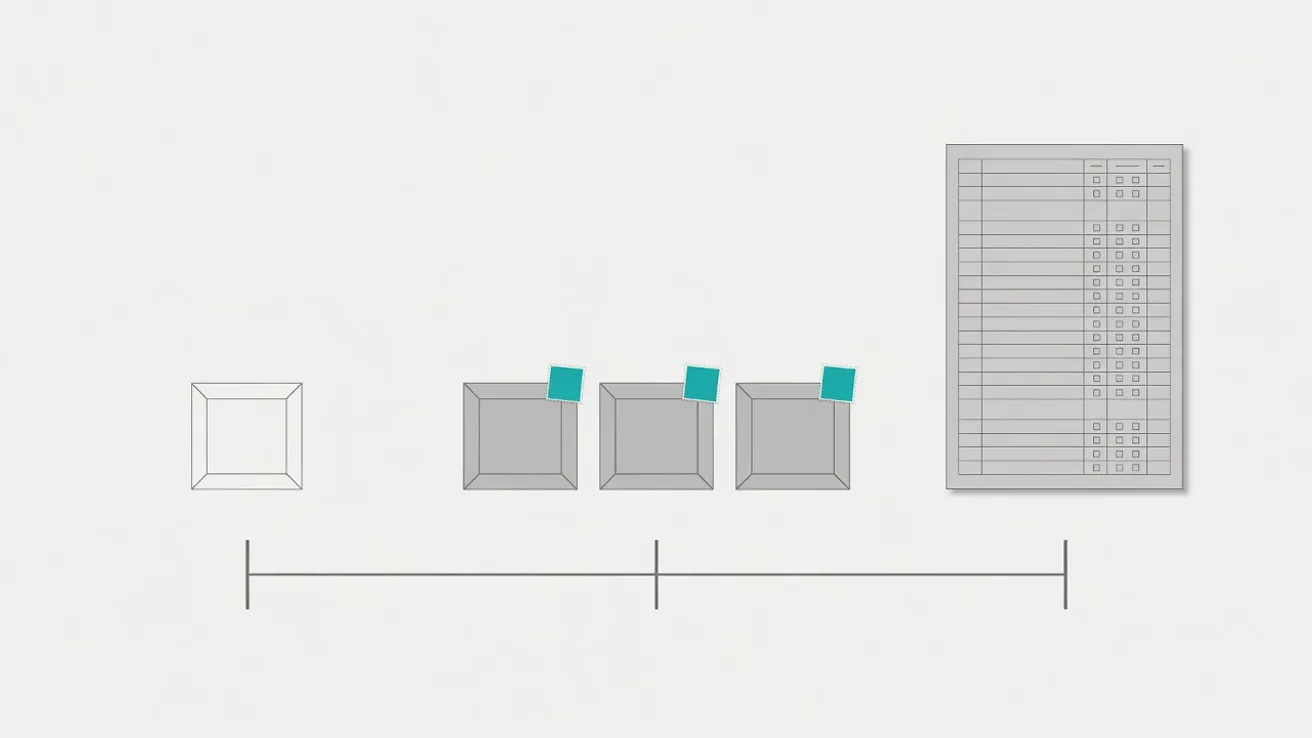
Three things decide the outcome, and none of them is the price of a single declaration on its own. The first is volume. An agent charges per declaration, an in house declarant costs a fixed salary every month, whether twenty files or two hundred come past that month. As long as your numbers are low, paying variable is cheaper than carrying a fixed cost. Somewhere those two lines cross, and where that point sits depends on your rates and your payroll, not on a rule of thumb from a trade magazine. The second is the margin per shipment. On bulk with a thin margin, every amount charged per declaration counts and you feel it straight away. On a high value shipment the same amount disappears into the noise, and what matters becomes lead time and avoiding an assessment, far more than the cost of filing itself. The third is the risk you are already carrying. That is the item missing from most business cases, because no invoice arrives for it. It is also the item that colours everything else here, because it does not move when the party doing the work moves.
Who carries the customs debt when an agent files for you?
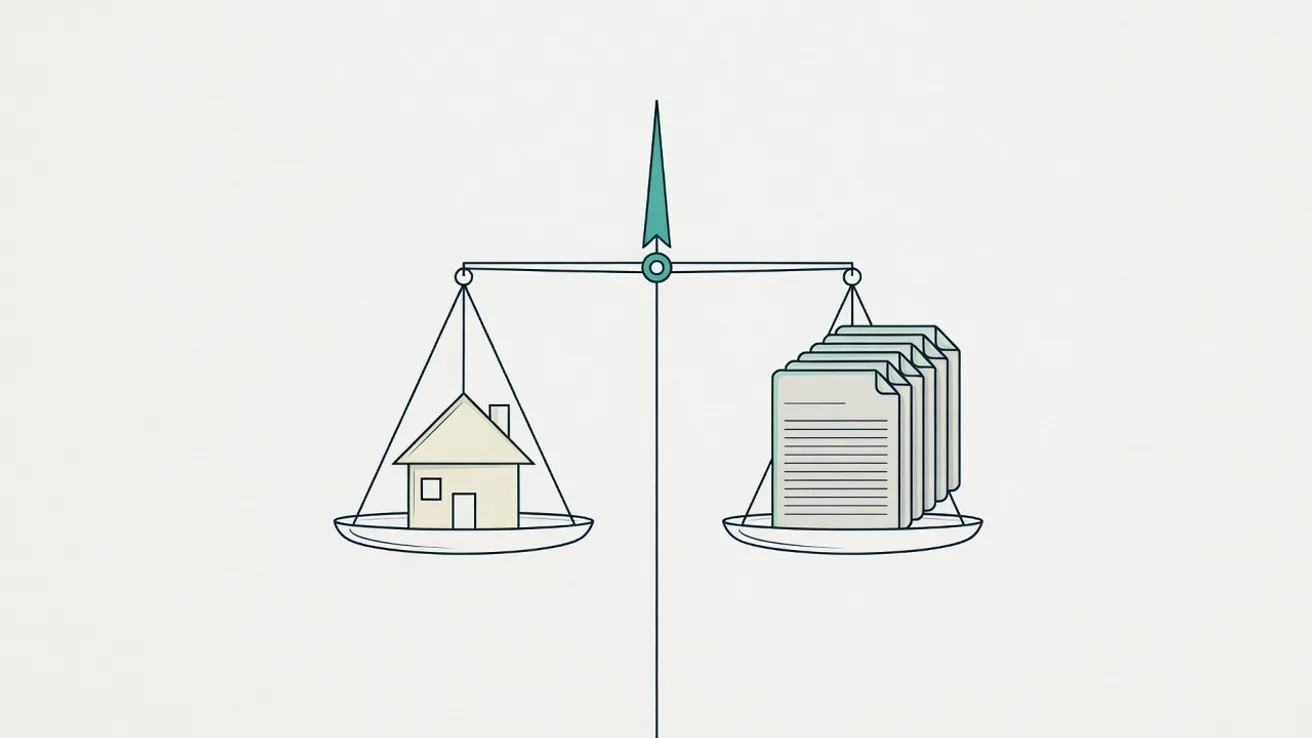
Outsourcing moves the work, not the risk. As the importer you are liable for the customs debt, and responsibility for the customs value, the origin and the classification sits with you, no matter who typed the declaration. Under direct representation the agent files in your name and on your behalf and you are the declarant. Under indirect representation the agent is the declarant and becomes jointly liable, which does not release you. If an audit shows that a commodity code has been wrong for two years, the assessment lands with the importer, with interest. That the agent picked the code is not a defence towards customs. Recovering it from your provider is a civil matter and not a customs matter, and the liability cap in their terms is rarely equal to the amount assessed. None of that makes outsourcing unwise. It means the comparison does not run between risk with them and risk with you. The risk sits on both sides of the line, and the only real question is who does the work that keeps it under control, and how visible that work is to you.
What do you need before the first declaration of your own goes out?
An EORI number that is active in the EU validation, on the legal entity that will appear on the declaration. That is the easy step. Then come the master data, and that is where the work is. Every article needs a complete ten digit commodity code, a country of origin that is the country of production and not the country of dispatch, a description that supports that code, and the document codes belonging to the measures under it. An article file that was good enough for your own administration for years is usually not good enough for the declaration system. You also need a system with a link to the customs systems and, where the procedure asks for it, a guarantee covering the duty and VAT that stands open. That is not a software item but a banking arrangement, and it has a lead time. And you need somebody who knows the rules. That is the item most often underestimated. An experienced declarant needs months before running your flows unsupervised, because the rules are only half the job; the other half is your article file and your suppliers. Until then someone else has to check the work, and that time comes from somewhere.
Which licences only pay off above a certain volume?
Filing yourself opens up licences that, when you outsource, you either use through someone else or not at all. The best known is deferred import VAT, in the Netherlands the article 23 licence. Import VAT is moved to your periodic VAT return instead of being paid at import and reclaimed later. The effect sits in your working capital and scales with the value you import: on a handful of shipments a year you barely notice it, on weekly containers there is money permanently tied up doing nothing. Entry in the declarant's records goes a step further. You enter the consignment in your own records on arrival and file the supplementary declaration over the agreed period. You save handling per shipment, but you move the load onto your administration, because customs audits exactly that alignment between the licence, the records and the declaration afterwards. So every licence carries a cost of its own: conditions, records that hold up, and somebody to manage it. Below a certain volume you pay that price for a benefit you never collect. Work it through per licence with your own numbers and your own import value, not with the example of a peer from a different trade.
Why do you rarely know where a shipment stands when you outsource?
Ask a shipper who outsources where their container is, and the answer is almost always that they will go and check. That is not unwillingness on the agent's side. The declaration lives in the agent's system, the statuses arrive there, and the shipper has no screen on it. What they get is an email, usually at the point where something is already stuck. The gap only shows when something goes wrong. A declaration that is accepted and has an MRN can still be sitting under a document check. A container that is clear from a customs point of view can still be held at the terminal because a notification was never made. Anyone who does not see those two sides next to each other hears it from the driver standing at a closed gate, and by then the time is gone. Visibility is therefore an argument in its own right, separate from cost. It is also the argument you can settle without insourcing. A connection that writes the customs status and the terminal status back into your own system gives you the view without you filing anything.
What does an audit after the fact look at?
A customs audit rarely asks whether a field was filled in neatly. It looks at three things: the customs value, the origin and the classification. And it does not look at one shipment but at a series, going back three years. On value it is the build up that counts. Does the declared value follow from the invoice, the payment records and the freight invoice, is the freight up to the external border included the way the incoterm requires, and have royalties and licence fees paid as a condition of sale been added. On origin it is the evidence behind a preferential rate: an EUR.1, an origin declaration or a statement from a registered exporter, and the supplier declarations underneath them. On classification it is the code, and whether the same code has been used on the same article for three years. If you outsource, you still have to produce that substantiation yourself. The papers are then spread across your administration and your agent's, and the question arrives years later, when the freight invoice from back then no longer surfaces on its own.
Why do most companies end up with a mix?
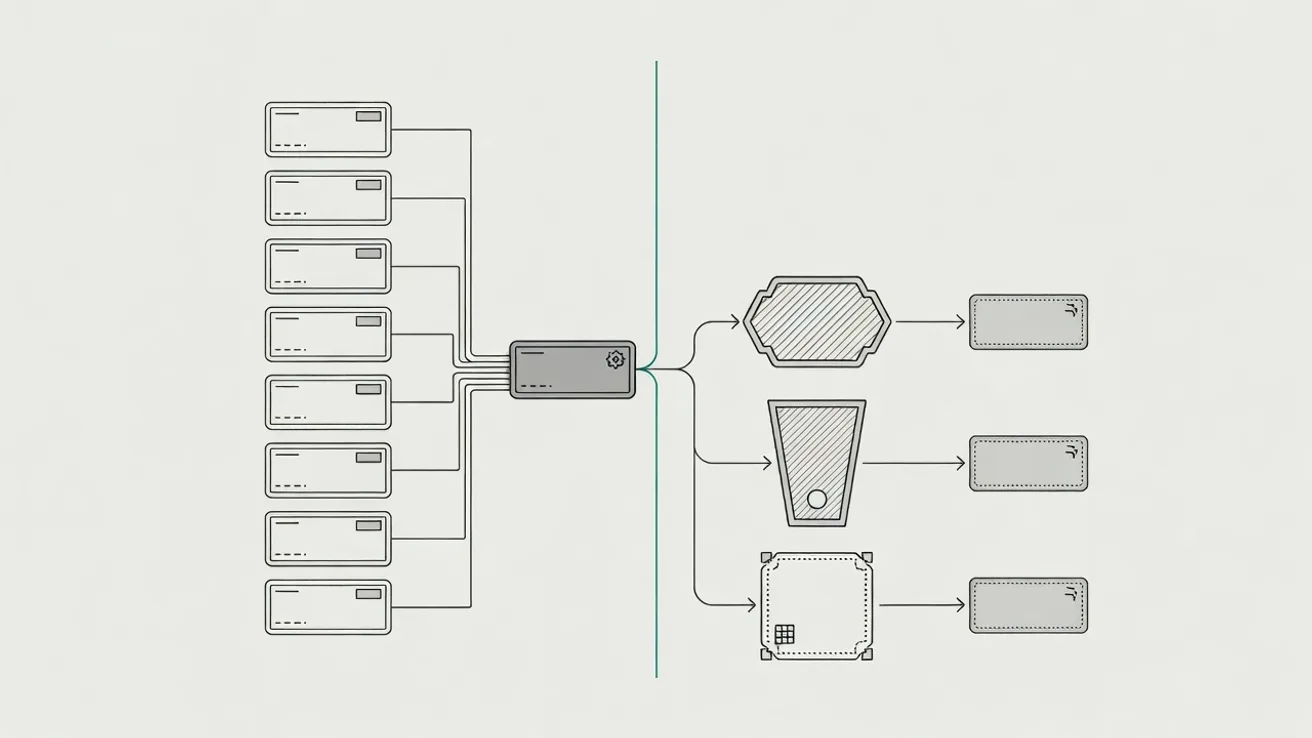
The practical outcome is rarely all or nothing. What lends itself to doing yourself are the steady flows: the same supplier, the same article file, the same codes, the same procedure, every week. There the work is predictable, the master data is stable and routine genuinely pays. What stays outside are the exceptions. A transit document for a border you rarely use, a shipment that has to go through an inspection, a country you ship to twice a year, a procedure you have seen once before. For those cases an agent is cheaper than building and maintaining the knowledge yourself, and it is also the category where a mistake costs the most. That mix has one condition: you have to know in advance which bucket a shipment falls into, rather than deciding file by file. Record per flow who does it, under which procedure and with which licence, and agree what happens when a shipment falls outside the pattern. Without that agreement you do not get a mix but two half processes, and then nobody carries the whole.