The customs connection
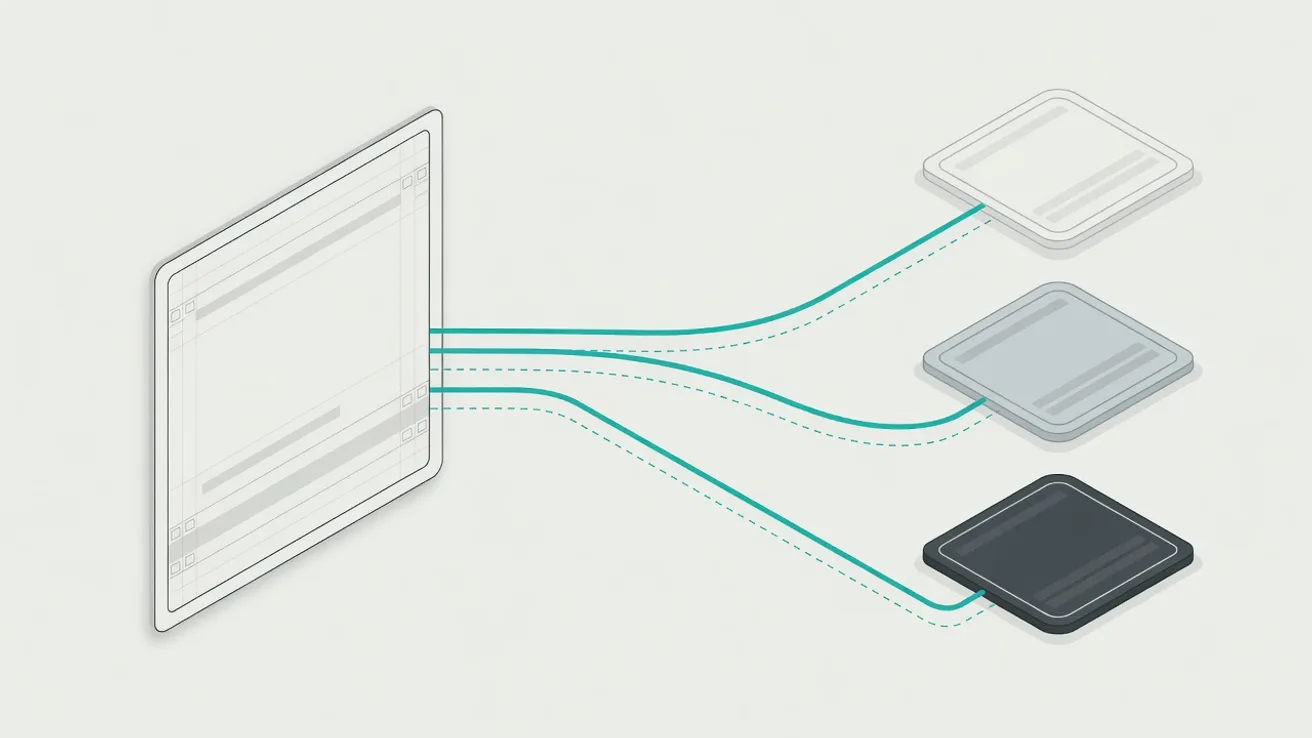
SKAI files directly with Dutch customs. Import and warehouse declarations go through DMS, transit through NCTS and the e-commerce flow through DECO, over certified connections with no intermediate software vendor in between. The customs response comes back the same way, into the dossier the declaration was built in.
What does a direct customs connection actually mean?
A direct connection means the message carrying your declaration goes from SKAI to customs, and not first to another software vendor. SKAI is itself the certified party on the link. There is no pass-through in between that collects messages, converts them and forwards them at its own pace. That sounds technical, but you notice it in daily work. When a declaration stalls, there is one place to look. When a message format changes because customs rolls out a new version of the data set, there is one party that has to implement it. And when you want to check exactly what went out, the full message traffic sits in your own dossier: what was sent, when, and what came back. It also removes a link from the chain of responsibility. The declarant remains liable for the content of the declaration, and that does not change. But nobody has to go and confer with a third party first to find out where a message got stuck.
Which customs systems sit behind the connection?
Import and warehousing run through DMS, the Dutch customs declaration system that replaced AGS. That is where you file the ordinary import declaration, the placement into a customs warehouse and the supplementary declaration for entry in the records. Transit runs through NCTS. T1 for non-Union goods, T2 and T2F for Union goods moving under customs supervision. Opening the procedure, the accompanying document and the discharge at the office of destination sit in the same flow as the import side. A dossier that starts as transit and ends as an import declaration therefore is not keyed in twice. The e-commerce flow goes through DECO, with the H7 data set for consignments up to one hundred and fifty euro. That is a different kind of traffic: high counts, small messages, handled in batches instead of dossier by dossier. The connection is built for that, because a system that sends one declaration at a time stalls at tens of thousands of consignments a day.
What does a direct connection change about turnaround?
The difference sits mainly at the beginning and at the end. At the beginning, because the message leaves as soon as your declarant approves it, instead of waiting for an intermediate system to work through its queue. At the end, because the customs response comes straight back into the same dossier the declaration was built in. On a declaration without a control that saves minutes, and minutes are not always interesting. On fresh produce they are, and on consignments booked against a terminal time slot they are too. The same goes for a declaration that has to be ready in the evening: there are no third party office hours setting the turnaround. More important than the speed of a single message is that the feedback never stops. A declaration accepted at three in the morning shows as accepted at three in the morning, MRN and all. The morning shift starts with a list that is correct instead of a round of portals.
Why does DMS reject a declaration without naming the cause?
A rejection from DMS comes back as an error code with a pointer to the element in the message. That code tells you which piece of data failed the check, but not why. A message saying an authorisation does not match can mean the authorisation number is wrong, that the authorisation is not valid on the date of acceptance, or that the EORI number on the authorisation differs from the one on the declaration. SKAI maps those codes back to the place in the dossier the data came from. You see which field it concerns, which document it was taken from and which checks ran on it earlier. From there you correct and refile, without picking the message apart by hand or pulling up a code list. The full message traffic is kept. If a question comes up later, you can retrieve which version of the declaration was accepted and which was rejected, with the codes that came with them and the time they arrived.
How does checking against the DTV catch rejections early?
The DTV is the Dutch tariff database. Per goods code and per country of origin it holds the rate, the applicable measures and the document codes those measures require. It is the same source customs checks the declaration against, and it changes daily. SKAI pulls that data in over the connection and checks the declaration against it before anything is sent. Does the code exist on the date of the declaration, does the combination of code and origin hold, is there an anti-dumping duty or a tariff quota attached, and is the document code that belongs to the measure present. If something is missing, your declarant sees it in the dossier and not in an error message. That is the whole point of checking first. A mistake you find yourself costs a minute of correction. The same mistake found by customs costs a rejection, a refiling and sometimes a control on a consignment that is already moving.
Which declaration types can you file over the connection?
IMA is the ordinary import declaration with the full data set, H1 in EU terms. It is the declaration that brings goods into free circulation and establishes the duty and the VAT. STO is the declaration for placement into a customs warehouse. The charge is deferred until the goods leave stock, and the stock records have to line up with what was declared. ATO is the supplementary declaration for entry in the records: the goods have already been released on the basis of the entry, and the full declaration follows within the period set by the authorisation. H7 is the super reduced data set for e-commerce consignments up to one hundred and fifty euro and runs through DECO. Six digit code, short description, value, consignor and consignee. Which type is used when, and which approval step belongs with it, differs per client. Those rules are held per client in SKAI and applied automatically, so a declarant does not have to remember per dossier what applies to whom.
How does status come back into the dossier?
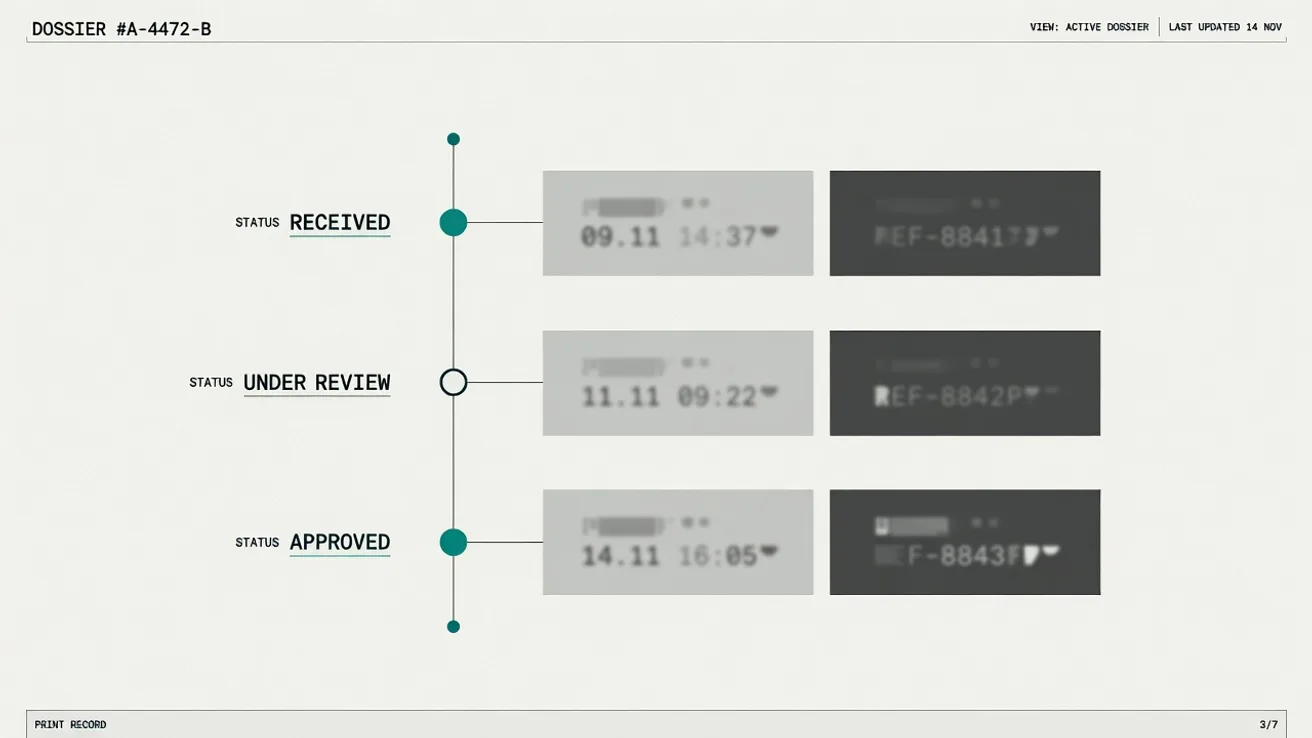
Everything customs sends back arrives on the dossier the declaration came from. The acceptance with the MRN, the announcement of a document control or a physical control, the release, and for transit the discharge at the office of destination. That means a declarant does not need a second system open to know where a consignment stands. The status line sits with the dossier, with the time and the message it came from. What is under control can be filtered, so at the start of the day you see which dossiers need attention and which run on their own. The same statuses are available over the REST API to your WMS, TMS or ERP. A planner working in the transport system sees there that a container has been released, without anyone copying it over or sending an email after it.